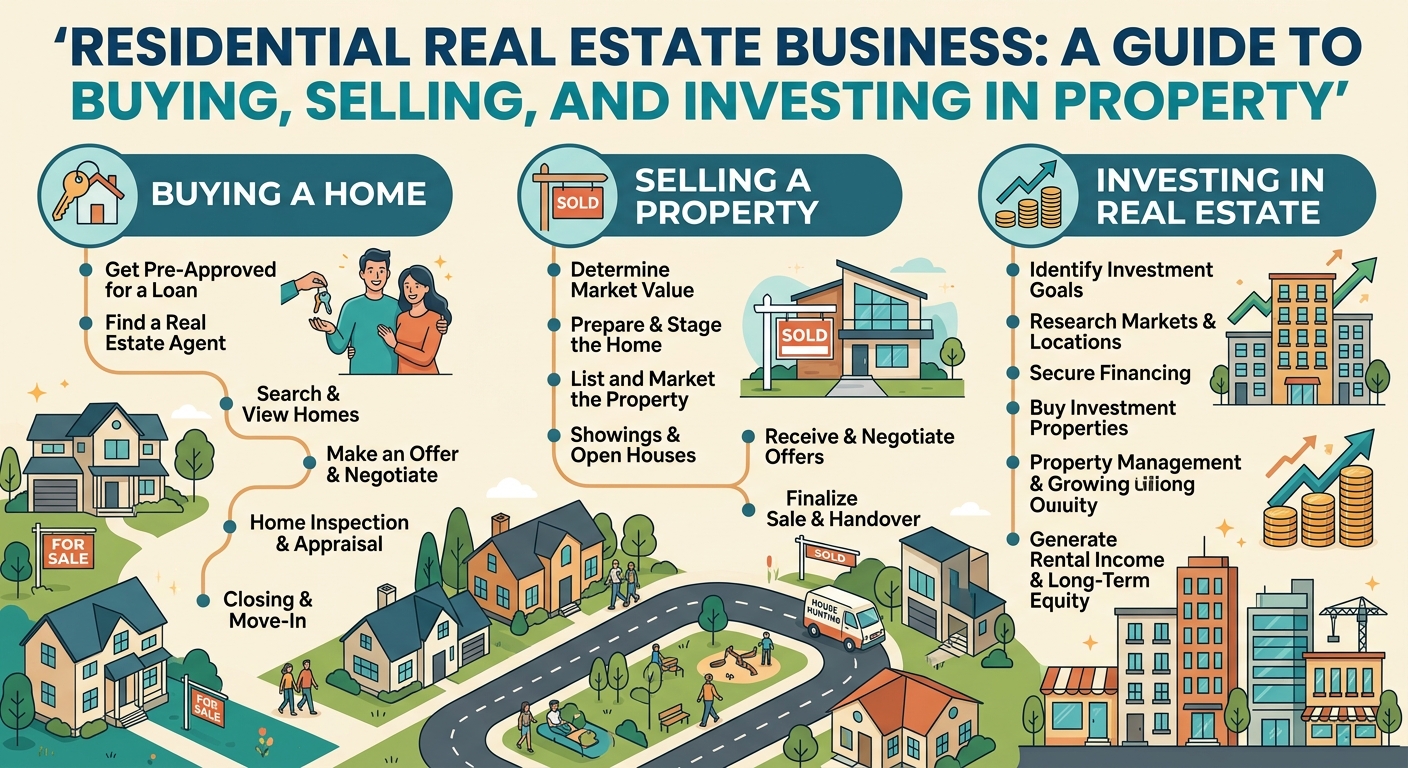

Residential Real Estate Business: A Guide to Buying, Selling, and Investing in Property
Residential real estate is a big part of the property market. It involves homes and other places where people live, like houses, apartments, condos, townhouses, and more. For people looking to buy, it’sa way to create a home they can enjoy. For those who invest, it can be a way to build money over time.
What Is a Residential Real Estate Business?
A residential real estate business helps people buy, sell, rent, or manage homes and other living spaces. This industry includes real estate agents, brokers, property managers, developers, and investors. A real estate company typically helps clients find the right home, show the property, talk about the price, get all the paperwork, rand guidedguide buyers or sellers through the whole process. The goal is more than just getting a sale done. A good real estate business should understand what the customer really needs and help them make the best decision for their situation.
Types of Residential Properties
The residential real estate market includes different kinds of homes. Single-family homes are for one family and are popular for those who like privacy and their own garden. Apartments and condominiums are good for people who want to be close to things and don’t want to take care of a home themselves. Townhouses offer a mix of house and apartment features. Duplexes and multi-family properties have more than one unit and are a good choice for investors who want to rent out.
The best type of home depends on a person’s money, lifestyle, where they want to live, and their plans. Why Location Matters: Location is very important in residential real estate. A nice house isn’t always a good investment if it’s far from what people need or in an area that isn’t in demand. Buyers often look for homes near schools, hospitals, shopping, public transport, jobs, parks, and main roads. Safety in the neighborhood, future growth, and how popular the area is can all affect the house’s value. For investors, areas that are growing and have high demand can offer better long-term results.
Buying a Residential Property
Buying a home is a big financial move. Buyers need to take the time to understand what the property is like and how much it will cost overall. Before making an offer, it’s important to know how much you can afford . Buyers should think about the price of the house, along with taxes, insurance, repairs, utilities, legal fees, and any cost for fixing up the place. A home inspection can help find problems that you might not see during a regular visit. Checking the legal papers and other important information is also key.
Selling Residential Property
Selling a house doesn’t just mean putting it on the market. How the place is shown, what the price is, how it is advertised, and how well it’s communicated can all affect how quickly it sells. Good photos, accurate descriptions, and online advertising can help attract more buyers.
Setting the right price is important too.If you set it too high, buyers might not be interested.If you set it too low, you might not get the best
return.A real estate expert can help come up with the best plan for selling the house based on the local market.
Residential Real Estate as an Investment
Many people see residential property as a long-term way to make money. Investors may buy homes to rent them out or wait until the value goes up . But real estate isn’t without risks. Prices can go down, homes can be empty, and unexpected repairs can cost money.
Successful investors usually look closely at the local market and think about how much income they can get and what the costs will be
before buying.
The Role of a Real Estate Professional
A good real estate professional can help make the buying or selling process smoother. They can give information about homes, the market, prices, deals, and the steps needed to complete a sale. But it’s important to choose the right professional. Experience, knowledge of the local area, communication skills, honesty, and a good reputation are all important. A good agent should explain the process and costs clearly without making promises that aren’t realistic.
Building a Successful Residential Real Estate Business. For businesses in the residential real estate industry, trust is one of the most important things they have. Customers are often making one of the biggest financial choices of their lives, so being honest and clear can really help. A good company should care about understanding their customers, giving accurate information about properties, answering questions quickly, and professionally keeping in touch even after the sale is done.
Having a strong online presence can also help real estate businesses connect with more people. A neat website, clear property listings, active social media, and helpful information can build trust with customers. Residential real estate is a chance for homeowners, buyers, sellers, investors, and businesses. Whether someone is looking for their first home, selling a house they already own, or thinking about real estate as an investment, doing some research and getting professional advice can make the whole process smoother. The market for homes can change over time, but companies that are open and honest, offer good customer support, and know their local area
are more likely to build strong connections and grow their business.