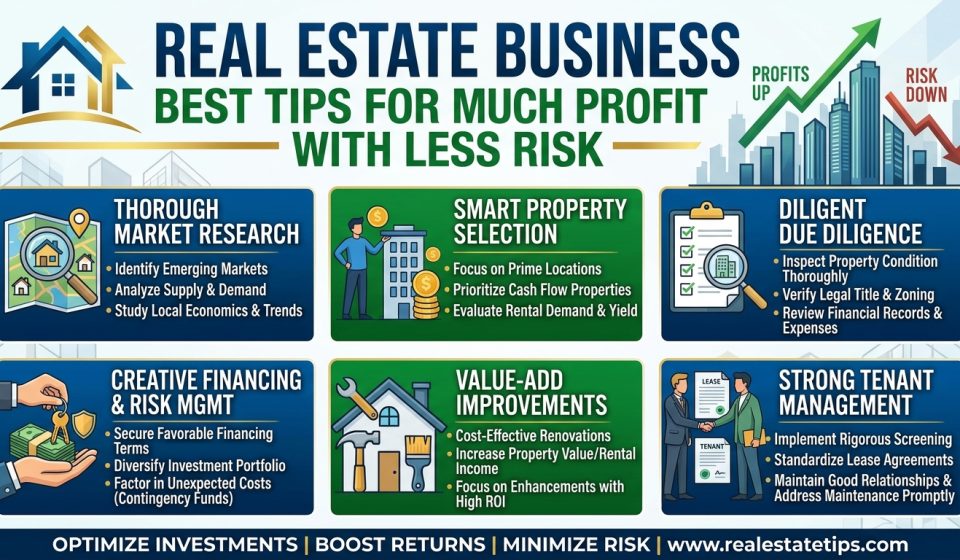

Real Estate Business Guide: How to Make More Profit With Less Risk
Real estate has always been a popular way for people to build their wealth. Some buy homes, apartments, land, or commercial properties for personal use, while others see it as a long-term investment. However, real estate is not a business where you can just buy a property and expect to make money easily. The market can change, properties
can sit empty, prices can drop, and unexpected costs can reduce your profits. The main thing to understand is the market, choose the right properties, and manage your money carefully. This guide will explain some practical ways to build a successful real estate business while keeping your risks as low as possible.
Understand Your Local Market
Before you invest any money, learn what’s happening in your local real estate market . Look at the prices of properties, rental demand, population growth, new roads, schools, shopping areas, offices, and other developments. A location that’s becoming more attractive to people and businesses may have better long-term potential. Don’t trust only what property sellers tell you. Compare different properties and check recent sale prices when you can. The more you know about your local market, the easier it is to find good opportunities.
Start With a Clear Investment Strategy
One common mistake that new investors make is buying a property without knowing how they will make money from i t. There are several ways to invest in real estate, including:
- Buying a property and holding it for long-term growth
- Purchasing rental properties for regular income
- Renovating and selling a property
- Developing land
- Managing properties for other people
- Becoming a real estate broker or agent
You don’t need to try all of these at once. Choose a strategy that fits your available money, experience, time, and how much risk you’re willing to take.
Location Matters More Than Luxury
A nice-looking house in a bad area may not be as good an investment as a simpler home in a growing neighborhood. When looking at a property, consider how close it is to main roads, public transport, schools, hospitals, markets, workplaces, and other important places.
For rental properties, think about who might want to live there. A home near a university could attract students, while an apartment close to business areas might attract professionals. A good location can help you rent the property more easily and may also make it easier to sell later.
Calculate the Numbers Before Buying
Never buy a property just because you like it. Before making an offer, calculate the expected costs and possible income . Include the purchase price, taxes, registration fees, renovation costs, maintenance, insurance if needed, property management, financing costs, and possible periods when the property might be empty. For rental properties,
compare the yearly rent you expect to get with the total amount you have invested. For example, if a property costs $100,000 and brings in $7,200 per year, the simple gross rental return is 7.2% before any expenses.
The actual return can be much lower after taking into account operating costs, vacancies, taxes, financing, and repairs.
Don’t Put All Your Money Into One Property
Putting all your money into a single investment can increase your risk. It’s better to keep an emergency fund instead of spending all your money on one property. Unplanned repairs, vacancies, legal issues, or changes in your income can create financial pressure.
A healthy cash reserve gives you more flexibility when things don’t go as planned.
Be Careful With Real Estate Loans
Taking out a loan can help you buy a bigger property, but it also increases your risk. Before getting a loan, make sure you understand the interest rate, repayment schedule, fees, and other terms. Be certain that you can afford the payments even if rental income drops or the property sits empty. A property that seems profitable when everything goes smoothly can become a financial problem if your plans depend on maximum rental and full occupancy. It’s usually safer to plan conservatively rather than assuming the best possible outcome.
Inspect the Property Before Buying
Never rely solely on photos or the seller’s description.Visit the property in person and, when needed, hire a qualified professional to check important parts like the structure, plumbing, electrical systems, roof, drainage, and other major parts.A property that seems cheap might need a lot of repairs. Make sure you know about these costs before you decide to buy
Check Ownership and Legal Documents
Legal problems can turn a good property into a big problem Before you buy, make sure the ownership iscleare;r, check the title documents, boundaries, any debts or claims, zoning rules, permits, and other legal things that apply.D epending on your country and the type of property, it might be helpful to get a qualified lawyer or legal expert to look over the documents. Never hurry to buy just because the seller says another buyer is waiting.
Look for Properties With Strong Rental Demand
If your goal is to earn income, rental demand is very important. A property with steady demand can give you more reliable income than one that is hard to rent. Check local rental prices and how often units are empty. Talk to local agents and property managers to find out what tenants are looking for. Featuress like parking, security, access to transportation, nearby services, and a good layout can affect how much demand there is for rental.
Increase the Value of the Property Carefully
You don’t always need a big renovation to make a property more appealing. Changes like painting, better lighting, improved landscaping, updated fixtures, or fixing damage can improve the look and rental appeal of the property. Avoid spending a lot on upgrades that the local market doesn’t value. A luxury renovation in an area where people are mainly looking for affordable housing may not give you the return you expect.
Build a Reliable Professional Network
Successful real estate investors usually don’t work alone. Depending on what you do, you might need connections with real estate agents, lawyers, accountants, contractors, property managers, inspectors, lenders, and other professionals. A trustworthy network can help you find good opportunities, avoid costly mistakes, and manage properties more effectively.
Don’t Chase Every “Great Deal”
Real estate sellers and agents often call properties “once-in-a-lifetime opportunities.” Do your own research before you believe these claims.
A real opportunity should still make sense after you check the numbers, location, condition, legal documents, and possible risks.
If the investment only works under unrealistic assumptions, it might not be a good deal.
Think Long Term
Real estate can build a lot of wealth, but it is not a guaranteed way to get rich quickly. Property values can go up and down.
Rental markets can change. Economic conditions, interest rates, regulations, and local development can all affect your investment.
Instead of just trying to make a quick profit, think about whether the property will remain useful and profitable over many years.
A successful real estate business is based on research, careful financial planning, good property choices, and managing risks wisely.No investment can promise high returns with no risk. However, you can reduce unnecessary risk by understanding the market, checking legal papers, inspecting properties, having enough cash, and not buying when the numbers don’t make sense. The best real estate opportunity isn’talways the cheapest property or the one with the highest return. It’s the one where the potential reward is reasonable compared to the risks you’re taking. Do your research, calculate before you invest, and never risk money you can’t afford to lose.