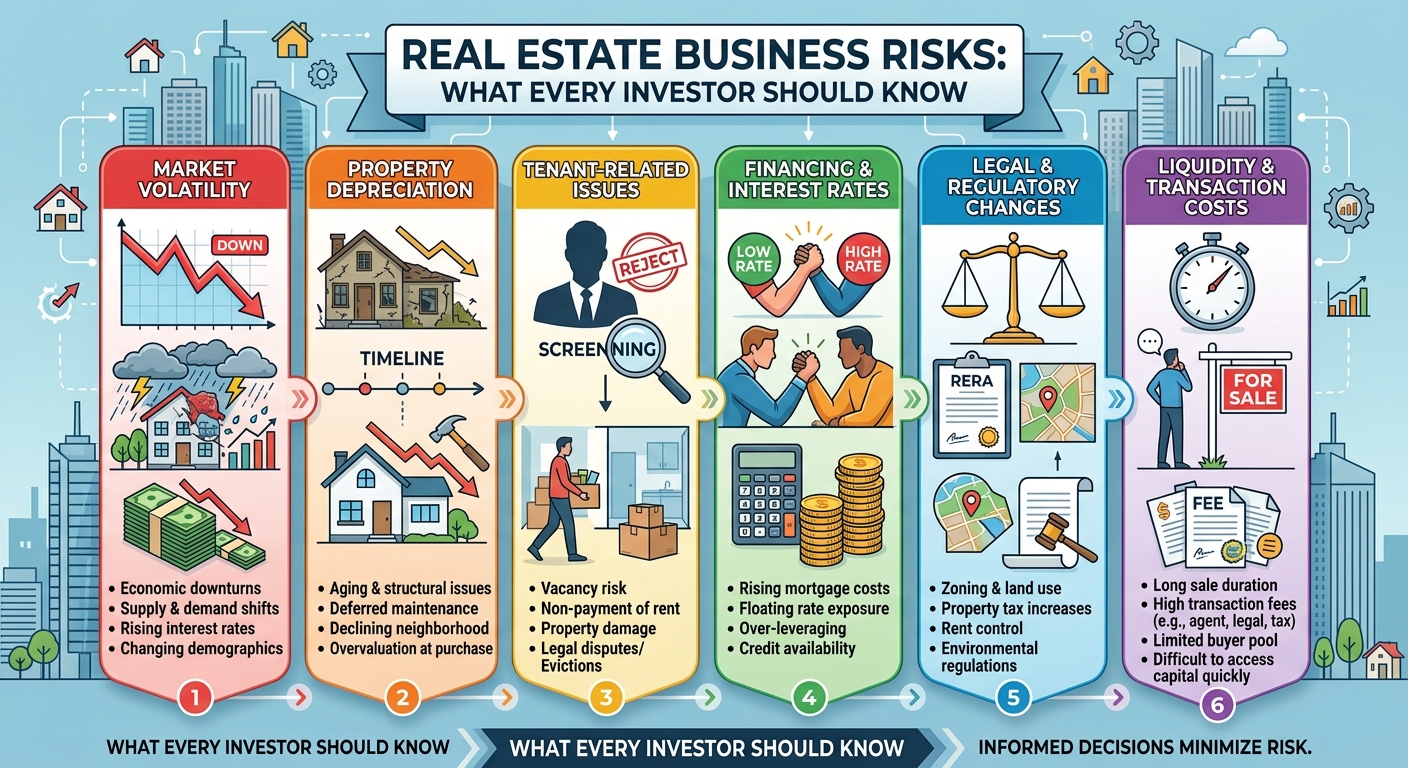

Real Estate Business Risks: What Every Investor Should Know
Real estate can be a good way to make money, but it’s not without its risks. Whether you’re buying houses to rent out, developing land, managing commercial buildings, or renting property, several risks can affect your profits and investments. Knowing these risks before investing can help you make better choices and prevent costly errors.
Market Risk
One of the main risks in real estate is changes in the property market. Property values can go up or down depending on the economy, interest rates, job market, population growth, and local demand. If you buy a property when prices are high, it might lose value if the market slows down. This can be a big problem if you need to sell quickly. Before buying, investors should look into local property prices, plans for the area, how much demand there is, and recent trends in the
market.
Financial Risk
Real estate usually needs a lot of money. Investors often take out loans or use other kinds of financing to buy property.
If interest rates go up or rental income goes down, it might be harder to afford monthly loan payments. Taking on too much debt can put a lot of pressure on your real estate business. A good strategy is to calculate all expected costs before buying a property and keep enough cash on hand for unexpected costs.
Tenant Risk
Rental properties depend a lot on tenants. A tenant might pay rent late, damage the property, leave without notice, or stop paying rent altogether. If a property stays empty for a long time, it can lose income while still needing to pay for maintenance, taxes, and loan payments.
Checking tenants carefully, having clear rental agreements, and doing regular inspections can help reduce these risks.
Property Damage and Maintenance
Every property needs to be maintained. Issues like roof leaks, plumbing problems, electrical issues, water damage, and structural problems can lead to unexpected expenses. Natural disasters like floods, storms, fires, or earthquakes can also cause serious damage depending on where the property is located. Property owners should check their buildings regularly and get the right insurance coverage to help deal with major losses.
Legal and Regulatory Risk
Real estate businesses must follow local laws and rules. These can include rules about property ownership, how land can be used, building standards, rental laws, taxes, and environmental rules. Ignoring these laws can lead to fines, legal issues, construction delays, or financial losses. Before buying or developing a property, it’s important to check ownership documents and understand the local rules that apply.
Location Risk
Where a property is located can greatly affect its value. A neighborhood that’s popular today may change over time. Things like transportation changes, crime rates, new businesses, infrastructure projects, schools, or future construction can influence demand and prices. Investors should look at not just the current state of an area, but also what might happen in the future.
Liquidity Risk
Real estate is not as easy to sell quickly as investments like stocks or cash. Selling a property can take weeks or even months, especially during a slow market. If an investor suddenly needs money, they may have to lower the price to sell faster. Because of this, real estate investors should avoid putting all their money into property.
Construction and Development Risk
Developing a property can be profitable, but it also has its own set of risks. Construction costs can go up due to things like labor shortages, rising material prices, delays, or changes in the project. A project might also take longer than expected, increasing the cost of financing and operations. Good planning, trustworthy contractors, realistic budgets, and setting aside money for unexpected costs are important for managing these risks.
Economic Risk
The overall economy can have a big impact on real estate. During times of inflation, recession, high unemployment, or rising interest rates, people and businesses may spend less on property. Commercial properties can be especially affected when businesses close or cut back on office and retail space. Real estate investors should think about different economic situations and not assume property values will always go up.
How to Reduce Real Estate Business Risk
While real estate risks can’t be completely avoided, they can be managed. Investors can lower their risk by taking the time to learn about the market, not taking on too much debt, keeping money set aside for emergencies, checking all paperwork for properties, using written agreements, looking at properties often, and spreading out their investments in different areas. It’s also helpful to work with experts like lawyers, accountants, property managers, inspectors, and others. These people can spot issues early on before they turn into big problems.
Real estate can be a good way to build wealth over time, but just buying property and hoping its value goes up isn’t enough. Things like the market, how you get money for the property, who lives there, how well the property is taken care of, rules from the government, where the property is located, and how the economy is doing can
all impact how much money you make. The best way to succeed is to know the risks, think through everything carefully, and make decisions based on real facts instead of guesswork. By doing good research and managing risks well, investors can have a better chance of creating a reliable and long-lasting real estate
business.